
Ramping up Nepal response as thousands remain cut off following flash floods
4 September 2026 - WELLINGTON - Caritas is scaling up its humanitarian response in Nepal as thousands of families remain cut off from aid following catastrophic flash floods last week.
Caritas Nepal staff and volunteers are expanding food distributions, delivering shelter and household supplies, and preparing longer-term support for children and families after one of the country's worst recent disasters.
The flooding struck on 26 August after a massive ice and rock avalanche high in the Himalayas triggered a destructive surge of water, mud and debris through river valleys in northern Nepal and neighbouring Tibet. Debris and floodwaters devastated downstream communities in Rasuwa and Nuwakot districts, destroying homes, roads, bridges, schools and health facilities, while search and recovery efforts continue across affected areas. At least 5,000 people remain missing.
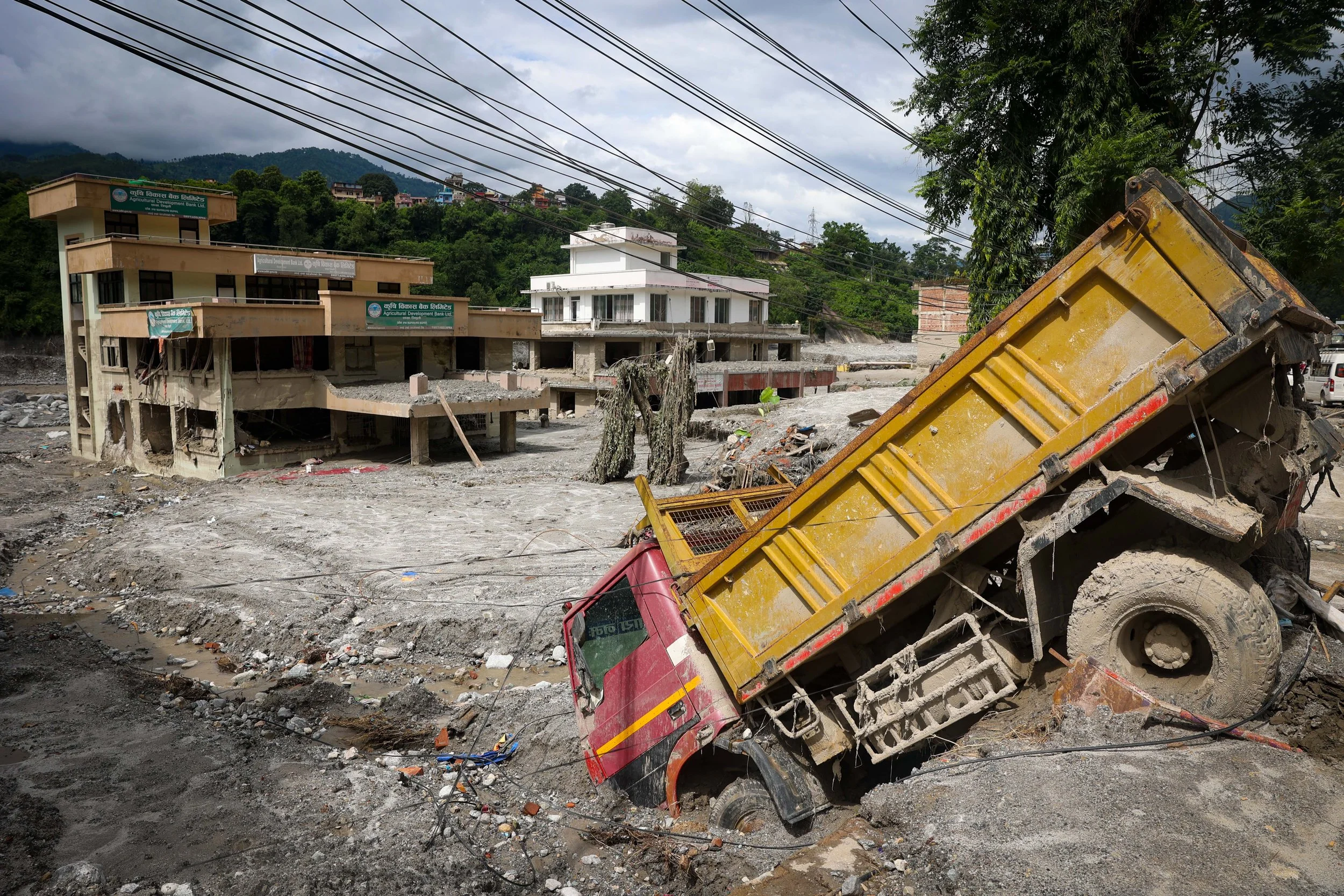
Aftermath of the flooding in Nawakot. Photo: CRS Nepal
Caritas reaching communities but struggling with access
Caritas Nepal Programme Manager Arpana Karki said reaching isolated communities remains one of the organisation's biggest challenges.
"We estimate that more than 2,000 households are still difficult to access," she said.
"People in urban and semi-urban areas have received support, but many villages have no road access at all. For some communities, helicopters are the only option."
Caritas has already distributed food and essential supplies to families sheltering in displacement centres and host communities. However, damaged roads, landslides and continuing heavy rain are slowing relief efforts.
One Caritas aid convoy travelling from Kathmandu to Nuwakot became stranded overnight when worsening weather and deteriorating roads made the journey too dangerous to continue.
"It took them about 18 hours to reach their destination," Karki said.
"They were carrying mostly dry food, rice, lentils and other emergency supplies. The roads were in terrible condition and it was raining heavily. Despite everything, they were eager to return and continue helping affected communities."
As emergency relief continues, attention is increasingly turning towards recovery.
"Mud is everywhere," Karki said.
"In some places it is several feet deep inside and outside buildings. Schools, health facilities and homes are covered. Clearing debris has to be one of the first priorities so people can start returning home and rebuilding their lives."
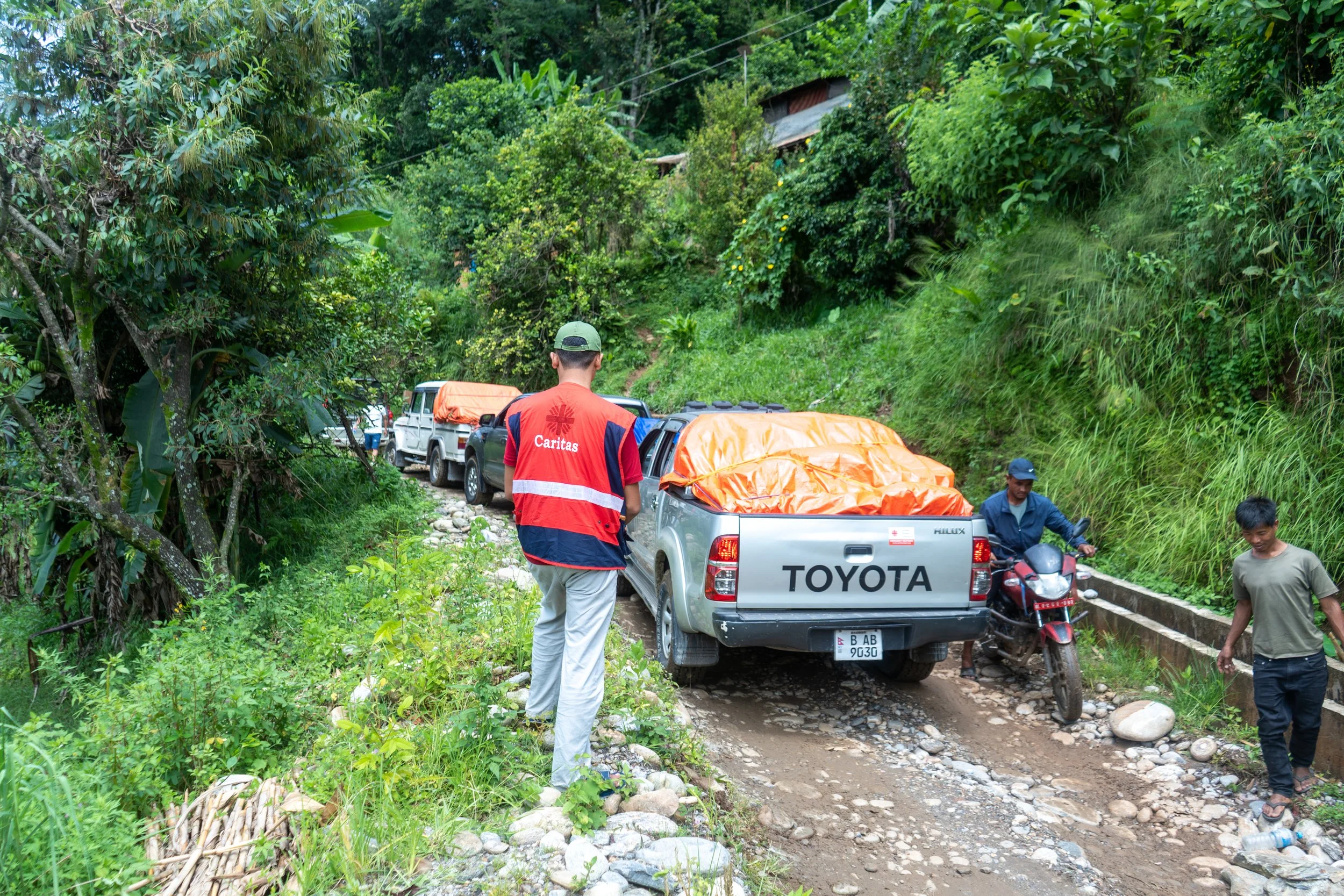
A Caritas convoy takes aid to Nuwakot. One convoy was stranded overnight due to the worsening road conditions. Photo: Caritas Nepal
Caritas is working with local authorities and partners on plans to clear damaged buildings and restore essential community facilities.
Particular concern remains for children and families who have lost loved ones in the disaster.
Karki said Caritas teams had identified 56 orphaned children in one community alone and expect further assessments to reveal additional needs across the affected region.
"The trauma is still very recent," she said.
"Many women have lost husbands, children and everything they owned. Right now, they are focused on finding safety. It will take time before people can begin to process what has happened."
Caritas is planning temporary learning shelters for children whose schools have been damaged, alongside psychlogical support, nutritious food assistance and child-friendly activities to help young people recover from the shock of the disaster.
New Zealand responds
New Zealanders have already responded generously to Caritas' Nepal appeal.
"We've seen an incredible response from people across Aotearoa who want to stand alongside communities in Nepal at this difficult time," said Mena Antonio, Chief Executive of Caritas Aotearoa New Zealand.
"Many New Zealanders have personal connections with Nepal through travel, work, faith communities and friendships. Every donation is helping our local partners reach families who have lost homes, livelihoods and loved ones."
"As the response moves beyond the immediate emergency, that support will be just as important. Recovery will take months, and for some communities it may take years."
Caritas Aotearoa is working closely with local partners as the response expands.
"The immediate focus remains getting food, shelter and essential supplies to families who need them most," said Antonio. "At the same time, it is becoming clear that recovery will take many months or even years. Communities have suffered enormous losses and will need support to rebuild homes, restore livelihoods and recover from the trauma of this disaster."
New threat from climate change
The disaster has also highlighted growing concerns about hazards in the Himalayan region, where rising temperatures are contributing to glacier retreat, unstable mountain slopes and an increased risk of ice avalanches, landslides and related flood events.
Karki said preparedness would be critical in the future.
"We used to think this was a distant risk, something that might happen in the future," she said.
"Now we have already faced it. The question is no longer whether it will happen, but when the next disaster will come, and whether we are prepared."
Caritas Aotearoa New Zealand is continuing its appeal to support emergency relief and long-term recovery efforts in Nepal. Donations will help provide food, shelter, hygiene supplies, education support and psychological care for families affected by the disaster.