
Strengthening disaster response with NZDF: Caritas enlists for gender & security training
1 September 2026 - WELLINGTON - Caritas participated in a July joint training exercise designed to strengthen coordination between aid agencies and the New Zealand Defence Force (NZDF).
Gail Robinson, Kaikōkiri Māori for Caritas, went to Trentham Military Camp for a two-day gender course, with support from the Council for International Development.
The course, which was followed by a one-day table exercise, brought soldiers, sailors and aviators together with NGOs to explore how the different sectors approach humanitarian response. While most NZDF personnel are not trained humanitarians, the force is often New Zealand’s first responder to disasters across the Pacific, making the opportunity to learn alongside humanitarian agencies particularly valuable.
"Whether we work locally or internationally, in the NZDF or for an NGO, we regularly engage with communities affected by inequality, violence, forced displacement, disaster and social exclusion," said Robinson. "We are all striving to achieve the same outcome: peace."
In recent years the NZDF has supported relief efforts following the 2024 Vanuatu earthquake, the 2024 Papua New Guinea landslide disaster, and the 2022 Hunga Tonga–Hunga Haʻapai volcanic eruption and tsunami in Tonga.
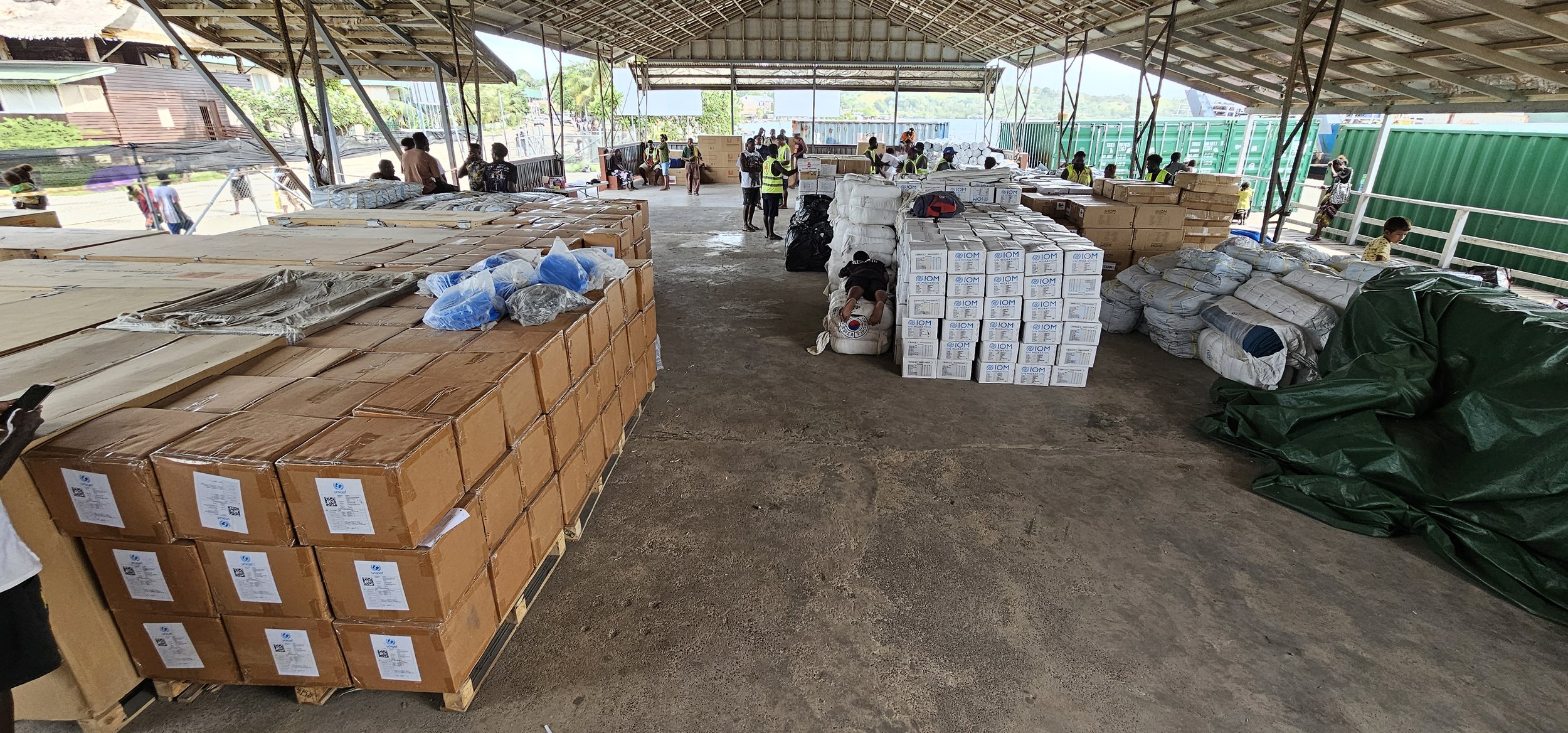
An aid warehouse in Gizo, Solomon Islands, where Caritas is responding to the humanitarian emergency caused by Tropical Cyclone Maila. Photo: Damian Kean/Caritas Aotearoa New Zealand
UN basis for training
The training was grounded in UN Security Council Resolution 1325, which recognises the impact of conflict on women and highlights the importance of their full and equal participation in conflict resolution, peacebuilding, peacekeeping, humanitarian response and post-conflict reconstruction.
Robinson said the training reinforced the importance of recognising that conflict and insecurity can affect women differently, while also highlighting the leadership, resilience and expertise women bring to their communities.
"There was a strong focus on ensuring that women's voices are included in crisis response and recovery," she said. "It was valuable to learn from others' experiences and identify where our approaches align."
The course forms part of CID's ongoing efforts to build capability across Aotearoa’s humanitarian and development sector, helping organisations strengthen their response to complex challenges at home and overseas.