
Belonging under pressure in Taybeh
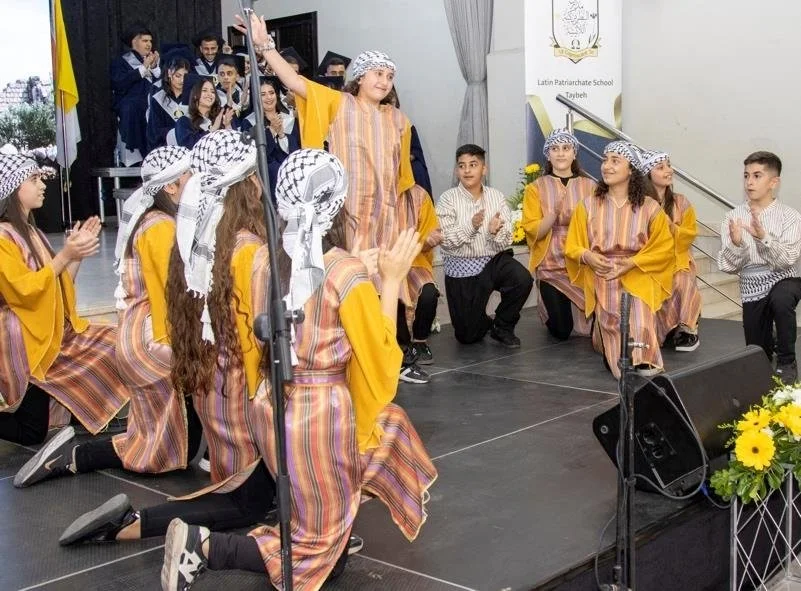
Led by Fr Bashar Fawadleh, the parish provides school education, youth groups, music, sport, cultural programmes and hospitality for pilgrims.
by Martin de Jong
For almost 2,000 years, the Christian community of Taybeh in the West Bank has faithfully followed Christ in the place (Ephraim) where Jesus sought refuge with his disciples after raising Lazarus from the dead: “Jesus therefore no longer walked about openly among the Jews, but went from there to a town called Ephraim in the region near the wilderness; and he remained there with the disciples.” (John 11:54).
Taybeh remains the last entirely Christian village in the region – a town of only 1800 with three churches, and the ruins of the original Church of St George built in the 4th century. It is surrounded by Israeli settlements in the West Bank. Since the Hamas attack in southern Israel on 7 October 2023, and ensuing war with Israel, attacks by illegal Israeli settlers have increased throughout the West Bank and Gaza, and Taybeh is no exception. Olive groves that provide families with their livelihood have been damaged, farmland has been destroyed, homes and vehicles have been attacked, and even the grounds of the ancient Church of St George have been threatened. Many families live with fear and uncertainty, wondering what the future will hold.
Yet the people of Taybeh continue to witness to their faith and non-violent resistance. Led by Fr Bashar Fawadleh, the parish provides school education, youth groups, music, sport, cultural programmes, and hospitality for pilgrims. These ministries do more than meet practical needs. They remind every person that they are valued, loved, and that they belong to God and to one another. But they also need our love and support.
“"Do not forget Taybeh! Taybeh must not vanish into silence," said the parish priest of Taybeh, Fr Bashar Fawadleh in a recent article in Vatican News . He has called on the international community to act and urged the Church throughout the world to offer prayers and support.
Caritas Jerusalem also runs a Health Centre in Taybeh and other locations in the occupied West Bank and Gaza, as well as mobile medical services. Under intense conflict and pressure, Caritas Jerusalem continues to meet the needs of people of all religions across the Holy Land, serving approximately 30,000 people in the Occupied Palestinian Territories. Other Caritas members across the Middle East are responding to diverse challenges brought on by intensified conflict in the region. Together they are providing a sense of belonging and hope in one of the darkest moments in the region’s history.
Earlier, Caritas Jerusualem also ran an employment programme in Taybeh producing olive oil and manufacturing “Peace Lamps for the Holy Land”. These were distributed around the world including in Aotearoa New Zealand, to unite people of all faiths in prayer for peace in the Holy Land. Though the Peace Lamps are no longer produced, their light and the prayer associated with it continues to burn around the world.
Caritas Aotearoa New Zealand joins with the prayers of Caritas Jerusalem, of Taybeh, and all people of goodwill that one day – despite the present darkness – peace will break out and the people of Taybeh and all in the region will belong securely in the land.
The story of Taybeh features in resources for Social Justice Week available here.
Other refs:
https://www.caritas.org.nz/where-we-work/bethlehem-university