
OPINION: This election, we can both love our neighbours and care for ourselves
The following is a recently circulated opinion piece by Mena Antonio, Chief Executive of Caritas Aotearoa New Zealand.
27 October 2026 - WELLINGTON - In recent days, New Zealand's foreign aid programme has found itself at the centre of a national political debate.
Some have argued that Aotearoa must choose between supporting people overseas and funding essential services at home.
But that is a false choice. New Zealand can invest in both.
We can ensure New Zealanders have access to the healthcare, education and services they need while continuing to assist communities facing poverty, conflict, disaster and the escalating impacts of climate change.
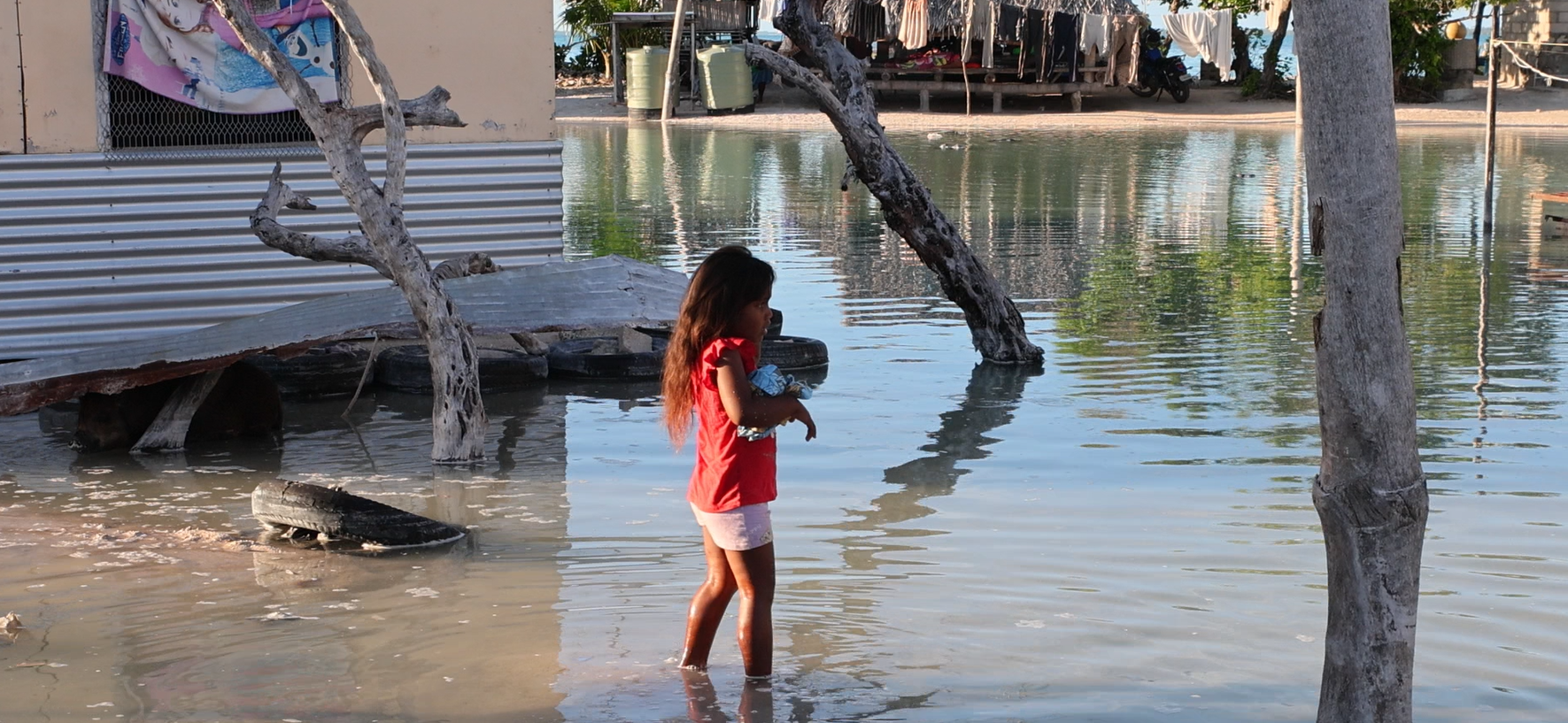
Communities in Kiribati experience daily flooding due to rising sea levels. Aid is helping them to grow more climate change resilient crops. Photo: Damian Kean/Caritas Aotearoa New Zealand
Aid is a small percentage of public spending
Our international aid outlay amounts to approximately $1.2 billion a year. While this sounds like a big number, it represents a tiny share of government expenditure and is significantly less than what New Zealanders spend each year on non-essentials, such as Lotto. In 2025, our Official Development Assistance represented around 0.27 percent of Gross National Income (GNI). In other words, just 27 cents out of every $100 generated in the economy went towards aid. This is approximately a third of the long-standing UN target of spending 0.7 percent of GNI on aid, to which New Zealand has committed but never achieved.
The moral case for aid
Yet, for the communities who receive that support, the impact can be enormous.
New Zealand's international aid partnerships help communities access healthcare, improve education, strengthen food security, recover from disasters and adapt to climate change. They support families whose lives are often shaped by challenges they did little to create. In Kiribati, aid is helping families grow food despite the looming spectre of climate change. In Fiji it is helping women gain economic independence. In Gaza, Lebanon and the Rohingya refugee camps in Bangladesh, it is helping those displaced by conflict and suffering.
For people of faith, and for anyone who believes in human dignity, this is fundamentally a moral issue.
When people are vulnerable, hungry, displaced, or facing disasters beyond their control, we have a responsibility to respond. Every person deserves the chance to live in safety and hope.
Soft power
At the same time, development assistance also serves Aotearoa's long-term interests.
We are a small country that relies on strong relationships, trust and cooperation with the international community. Development partnerships help build those relationships over decades. Diplomats often call aid "soft power," because it is a potent, yet cost effective way to build goodwill, trust and regional stability.
This is New Zealand driving participation, solidarity, and a preferential option for the poor on an international level.
And even if New Zealand were to retreat from its commitment to international development, it is unlikely that the drivers of poverty and inequality will disappear. Across the Pacific and Southeast Asia, other countries will step in to fill the gap. The real question is whose priorities will shape that support. Will the needs of vulnerable communities come first, or will the pursuit of influence, territory, security, resources and commercial interests take precedence? Will assistance be guided by a commitment to human dignity and solidarity, or used to advance other interests? Will countries already struggling with the impacts of climate change be offered grants, or compelled to take on more debt?
We have already seen the consequences when major donors pull back. The dismantling of USAID, the US government's official development assistance programme in early 2025 disrupted health, development and humanitarian programmes around the world. A recent study suggested that these cuts could contribute to more than 14 million additional deaths globally by 2030, including 4.5 million children under five.
Aid is not simply money leaving the country. It is an investment in the kind of region, and the kind of world, we want to live in.
This debate is not about abstract figures in next year's national budget. It is about families recovering after disasters, farmers adapting to changing weather patterns, children gaining access to education and communities finding hope amid conflict and poverty.
These are real people, our brothers and sisters in Christ, whose lives matter.
Aotearoa is strong enough, compassionate enough and prosperous enough to care for vulnerable people overseas while also investing in the well-being of people at home.
We do not have to choose one or the other.