
Pacific countries need more than $6 bn/year to cover cost of climate change
The climate funding gap is worse than thought and driving Pacific nations into unsustainable debt.
7 October 2026 - WELLINGTON - Pacific countries could face an annual funding shortfall of up to $6.3 billion as new research reveals the true cost of adapting to climate change is far higher than previously understood.
The findings raise concerns that Pacific governments already burdened by debt may be forced to borrow even more to protect communities from a crisis they did little to create.
The new report, Turbulent Waters: Navigating Debt and Climate Vulnerabilities in the Pacific, estimates that collectively, Pacific countries may face an annual climate-related funding shortfall of between $4.7 billion and $6.3 billion. This includes funding needed for climate adaptation, responding to loss and damage from cyclones, drought and other extreme weather, and supporting the transition to renewable energy.
While the figure is substantially higher than previous estimates, the report's authors stress this does not mean the cost of climate impacts in the Pacific have suddenly worsened. Instead, it reflects a much better understanding of what adaptation measures will cost.
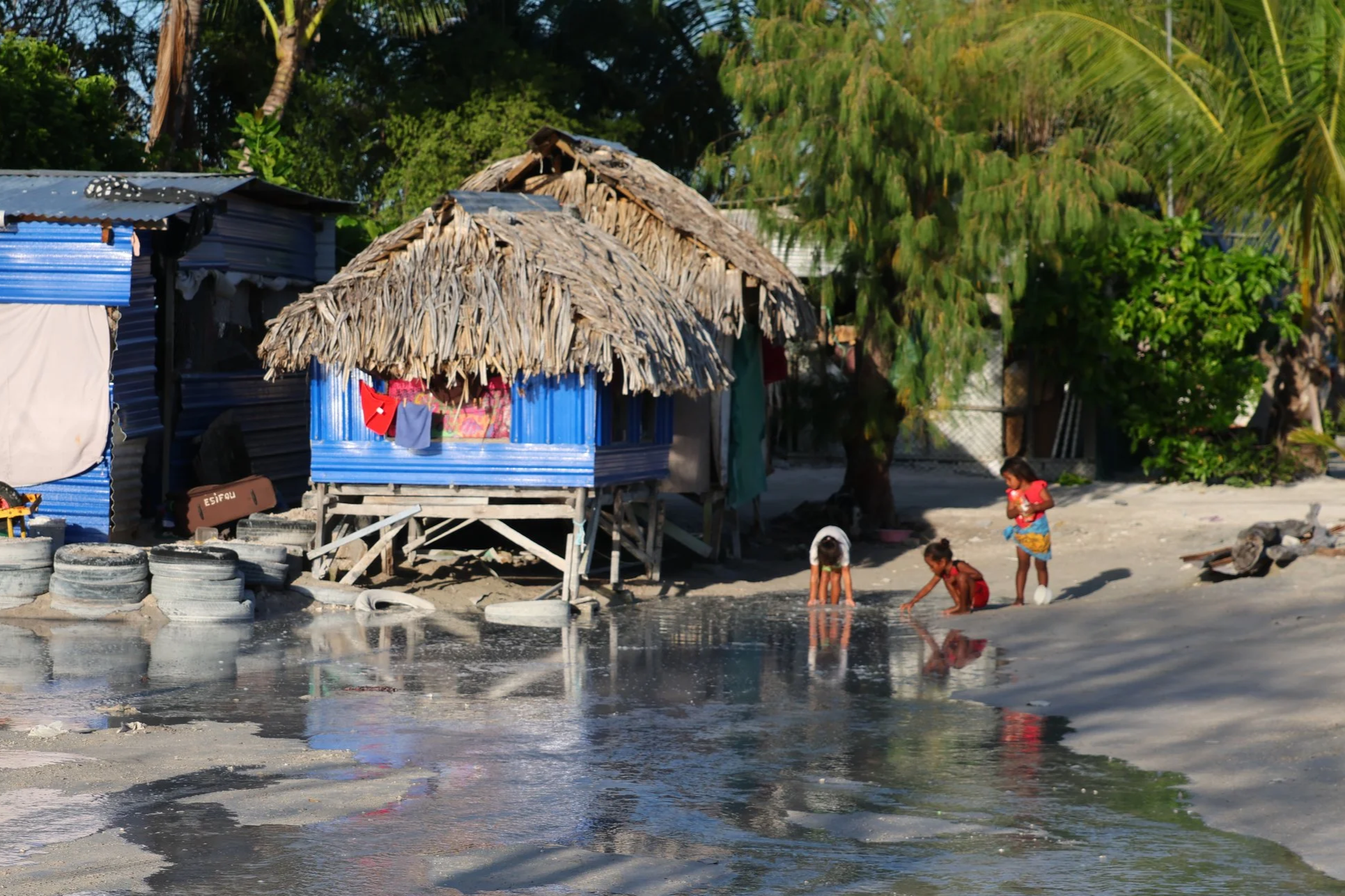
Villages in Kiribati already experience daily flooding on high tide due to rising sea levels caused by climate change. Photo: Damian Kean/Caritas Aotearoa New Zealand
Pacific communities cannot be expected to borrow their way out of the climate crisis
Published by Caritas, Jubilee Australia and Misereor, the report examines the growing pressure created by the combined challenges of climate vulnerability and public debt across the Pacific. It argues that wealthier nations, including Australia and New Zealand, must provide significantly more grant-based support so Pacific countries are not pushed deeper into debt.
Earlier estimates have put average adaptation needs at around 6.6 per cent of GDP per country. For example, in Fiji, debt servicing now absorbs 22 percent of government revenue and exceeds spending on both the health and education sectors.
Caritas Australia CEO said the findings highlighted a profound injustice faced by Pacific communities already living with the impacts of climate change.
“The Pacific contributes least to climate change yet carries some of its heaviest burdens,” said Kirsten Sayers, CEO of Caritas Australia. “Communities are doing everything they can to adapt, but too often they are being asked to take on debt to respond to a crisis they did not create. This new research suggests the scale of that challenge is far greater than previously understood. What has not changed is the reality facing Pacific communities, but instead our understanding of what it will take to support them.”
Mena Antonio, Vice President of Caritas Internationalis and CE of Caritas Aotearoa New Zealand Mena Antonio said the report highlights a growing injustice facing Pacific countries.
"The Pacific is being asked to pay twice,” she said. “First, through the impacts of climate change, and again through servicing the debt needed to respond to those impacts. Communities cannot borrow their way to safety. Wealthier nations must step up to help Pacific countries adapt, recover and thrive."
The findings were released ahead of pre-COP31 climate negotiations in Nadi, where Pacific leaders, churches and civil society organisations are calling for climate responses grounded in justice, solidarity and the priorities of affected communities.
The research is timely, coming at a time of increasing economic and climate pressure across the region. Recent spikes in global fuel prices have highlighted the Pacific's need for renewable energy and continued dependence on imported fossil fuels, while forecasters warn the current El Niño could bring drought, water insecurity and other climate-related impacts to many Pacific communities.