
Belonging under pressure in Taybeh
17 September 2026 - WELLINGTON - For almost 2,000 years, Taybeh, in the Palestinian West Bank has been a place of continuity.
Known in biblical times as Ephraim, the town is traditionally considered the place Jesus sought refuge with his disciples after raising Lazarus from the dead. Today, Taybeh remains the last all Christian Palestinian village in the West Bank, home to 1,800 people, historic churches, and the ruins of the 4th Century Church of St George, one of the oldest Christian sites in the Holy Land.
But residents say that life in Taybeh is becoming increasingly difficult.
Since the outbreak of war following the Hamas attacks on 7 October 2023, and Israel’s military response in Gaza, violence by illegal Israeli settlers has intensified throughout the West Bank. Attacks on olive groves, homes, farms, and vehicles, community property and even churches has been reported. Fires have been lit near the town, agricultural land has been damaged, and some families say they are struggling to access land that has supported them for generations.
“Do not forget Taybeh! Taybeh must not vanish into silence," said Fr Bashar Fawadleh, Taybeh parish priest, in a recent article in Vatican News.
His concern is not only for the town's security, but also for its future.
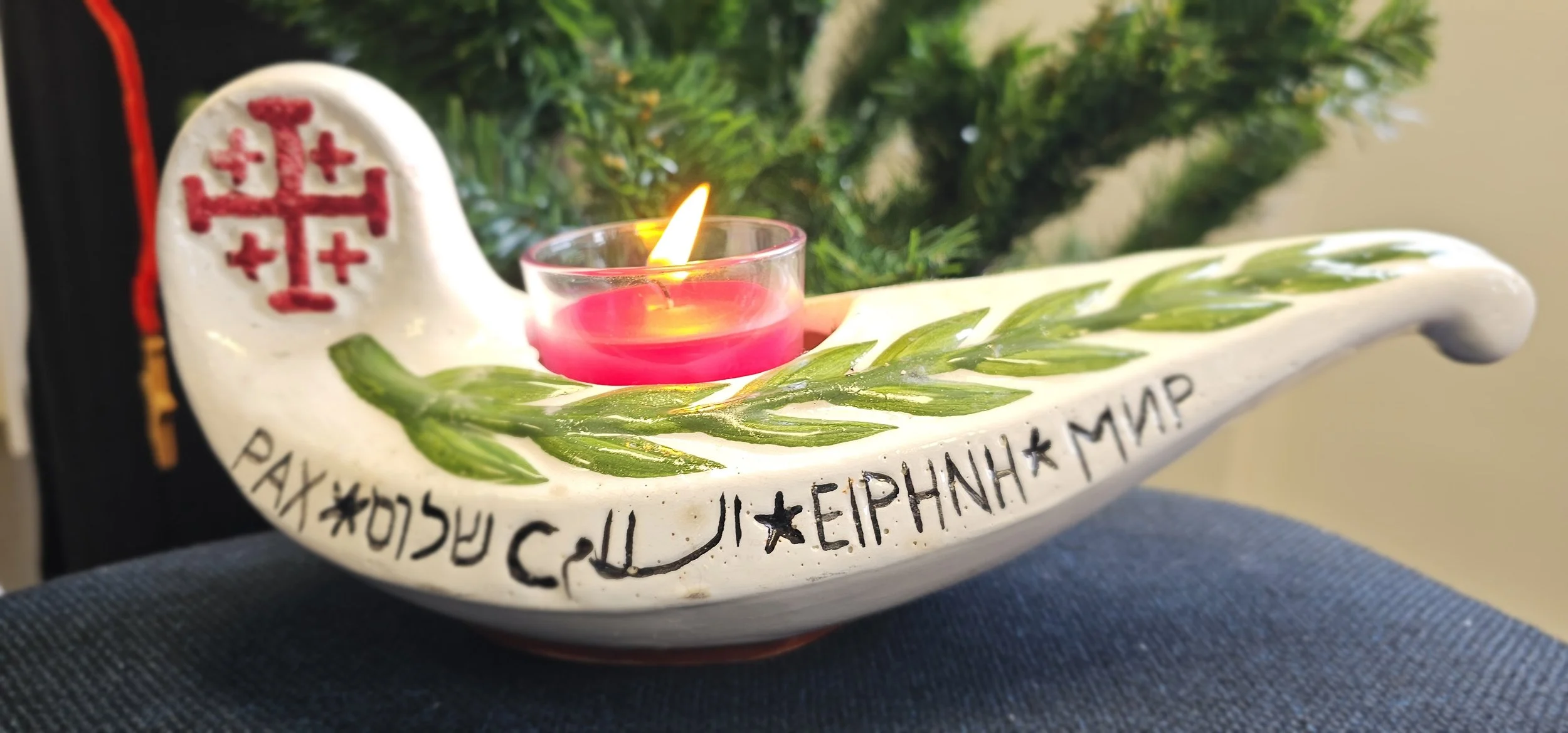
Peace lamps made in Taybeh have been sold across the world, including in Aotearoa. Photo: Damian Kean/Caritas Aotearoa New Zealand
“Jesus therefore no longer walked about openly among the Jews, but went from there to a town called Ephraim in the region near the wilderness; and he remained there with the disciples.” (John 11:54).
For the people of Taybeh, olive groves, churches and family lands are more than physical assets. They are part of a living community that traces its roots back centuries. And many are expressing their faith and commitment to the town through non-violent resistance. Community life continues despite the challenges. Led by Fr Bashar Fawadleh, villagers continue under pressure to provide education, youth groups, music, sport, cultural programmes, and hospitality for pilgrims. These ministries do more than meet practical needs. They remind every person that they are valued, loved, and that they belong to God and to one another.
That sense of belonging is being tested.
There is growing pressure on Palestinian communities in the West Bank, including restrictions on movement, economic hardship, damage to property and concerns about the long-term viability of some rural communities. In Taybeh, these pressures are contributing to a loss of population as some families move elsewhere.
“Preserving the Christian presence here in Taybeh is a shared responsibility,” says Fr Fawadleh. “Given everything that is happening, some residents are reaching a breaking point where they want to leave their land and abandon everything.”
He has called on the international community to act and urged the Church throughout the world to offer prayers and support.
Caritas Jerusalem continues to maintain a presence in Taybeh through its Health Centre and wider humanitarian programme across the Occupied Palestinian Territories. Serving people of all faiths, Caritas provides essential services to communities affected by conflict and displacement.
Taybeh also has links with supporters in Aotearoa New Zealand. In previous years, a Caritas Jerusalem employment initiative in the town produced olive oil and “Peace Lamps for the Holy Land”. These were distributed around the world, including in Aotearoa, as symbols of solidarity and prayers for peace.
By Martin de Jong, Write/Storyteller – Caritas Aotearoa New Zealand
Read more:
https://www.caritas.org.nz/where-we-work/bethlehem-university