
World Humanitarian Day: Protect humanitarian workers & humanitarian law
19 August 2026 - WELLINGTON - Statement on World Humanitarian Day.
More than 1,000 humanitarian workers were killed around the world in the last three years, making this one of the deadliest periods on record for those delivering aid to people caught up in conflict and disaster.
Among them, several members of the Caritas family lost their lives in Ukraine, Central African Republic and Gaza. The war in Gaza has been particularly dangerous for aid workers. It is now the deadliest environment for humanitarians ever recorded in modern history.
Right now, Caritas humanitarian workers are responding to earthquakes in Indonesia, Venezuela and Colombia, floods in Pakistan and Bangladesh, and conflicts in Ukraine, Gaza, the West Bank, Lebanon, Democratic Republic of the Congo and Sudan, among many others. Closer to home, we are supporting communities in Solomon Islands and Papua New Guinea following Tropical Cyclone Maila. Demand for humanitarian assistance has never been higher. Yet humanitarian funding is being reduced by donor governments, often in favour of increased defence spending, placing additional pressure on organisations already stretched by growing need.
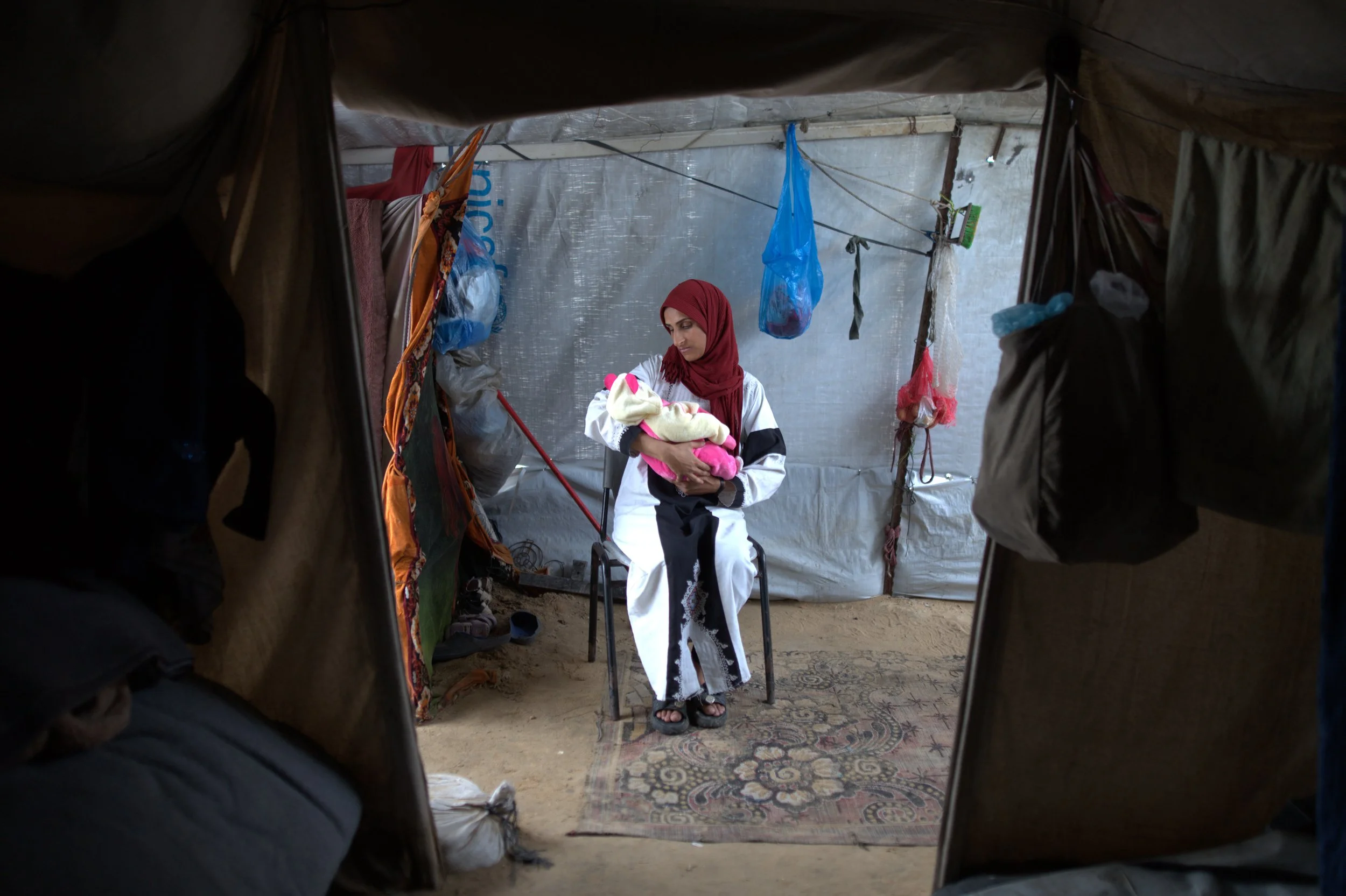
A woman in Gaza nurses her newborn child. The infant needed urgent medical attention at birth, which was provided through a Caritas run health clinic. Photo: Caritas Jerusalem/Trocaire/Raw Media
The rise in attacks on aid workers is making this increasingly difficult situation even worse. Our colleagues and friends are being killed, assaulted, detained, abducted and prevented from reaching communities in need. Most are not international staff. They are local people helping their own communities through war, displacement and natural disasters.
The consequences reach far beyond the individuals directly affected. When aid workers cannot do their jobs safely, food stops coming, health services are disrupted, and vulnerable families lose access to the help they need to survive.
Aid workers are not targets
On World Humanitarian Day, we remember our fallen comrades – those that lost their lives while helping others. We recognise the thousands of humanitarian workers who continue to operate in some of the world's most difficult and dangerous environments.
We also call on governments to move beyond expressions of concern.
Aotearoa is a small country that depends on a strong multilateral system and respect for international law, including international humanitarian law. This helps explain why New Zealand has long championed the international rules-based order. When a humanitarian worker is deliberately targeted, it is not only an attack on an individual, but also on the humanitarian principles and the international legal framework that safeguards human dignity.
The rules of war are clear. Civilians, including humanitarian and medical personnel, must be respected and protected. Humanitarian assistance must be allowed to reach people in need.
But concern and condemnation do not automatically equate to accountability.
Those engaged in conflict are also obliged to ensure humanitarian personnel can operate safely, investigate attacks when they occur, and hold those responsible to account.
Protection is not an abstract principle. It is the difference between reaching a family with food, medicine or shelter, and being unable to get there at all. For millions of people caught up in conflict and disaster, it can be the difference between life and death.
Happy World Humanitarian Day!