
World Refugee Day 2026 75 years of protection: "Until Everyone Is Safe"
STATEMENT FROM CARITAS INTERNATIONALIS
On World Refugee Day, Caritas Internationalis joins the global call to renew protection for the millions of people forced to flee their homes, as the world marks the 75th anniversary of the 1951 Refugee Convention.
20 JUNE 2026 - ROME - On World Refugee Day, Caritas Internationalis joins the global call to renew protection for the millions of people forced to flee their homes, as the world marks the 75th anniversary of the 1951 Refugee Convention.
Adopted in the aftermath of two devastating world wars, the Convention was born from a determination never again to abandon those fleeing persecution and violence. Seventy-five years on, its relevance has never been clearer.
According to the UN Refugee Agency (UNHCR), 117.8 million people were forcibly displaced worldwide at the end of 2025 – roughly one in every seventy people on the planet. This year's UN theme, "Until Everyone Is Safe", is a reminder that safety is not a privilege reserved for the few, but a fundamental right – the right to life and to a life lived in dignity. For as long as people are forced to flee conflict, climate change or persecution, our shared responsibility endures.
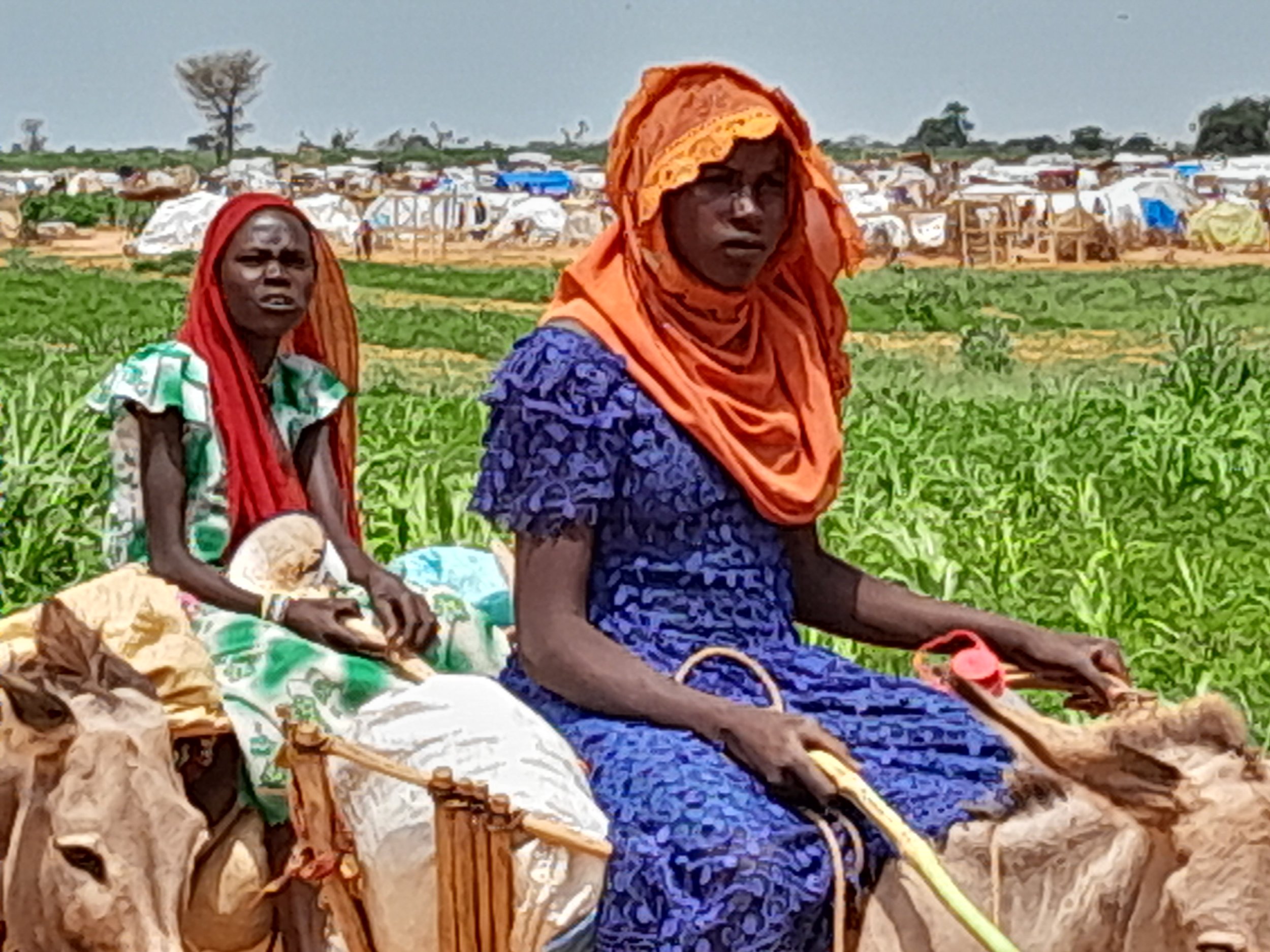
Sudanese refugee women in Chad. Photo: Caritas Internationalis
A founding promise under threat
The 1951 Convention carries a universal message: a person forced to seek refuge beyond their borders does not lose their rights or their dignity. It affirms that refugees must be able to live in safety, access education, work, take part in community life and look to the future with hope.
These foundations are under growing strain. In recent years, States have witnessed a troubling trend towards closed borders, deterrence policies and the externalisation of asylum procedures. In many contexts, the principle of non-refoulement – the cornerstone guarantee that no one should be returned to danger – is being eroded, leaving people in already vulnerable situations exposed to even greater risk.
Crises driving displacement
Today's displacement crisis is shaped by a number of severe and protracted emergencies. Official figures reveal that around seven in ten refugees come from just a handful of countries: Venezuela, the occupied Palestinian territory, Ukraine, Syria, Afghanistan, Sudan and South Sudan.
Sudan also remains the world's largest internal displacement crisis, with over nine million people uprooted inside the country. To these must now be added the rapidly worsening displacement in Lebanon and Iran, where recent escalation has forced more than a million people from their homes.
Caritas member organisations are present in many of these contexts, working alongside local churches and communities to provide shelter, food, protection and a listening presence to people who have lost everything.
Refugees are too often spoken of only as victims. Yet their journeys are also journeys of resilience, resourcefulness and hope.
“Every displaced person carries a story of loss, but also of extraordinary resilience. Our faith calls us to see in them not a burden, but a brother or sister. Let's remind that even Jesus started His life as a refugee in Egypt. Solidarity is not charity from a distance; it’s the recognition that none of us is safe until everyone is safe. We urge governments to uphold the letter and the spirit of the Refugee Convention.”
Victor Genina, Director of Integral Human Development at Caritas Internationalis
Caritas Internationalis' call to action On this World Refugee Day
Caritas Internationalis calls on:
States to respect their obligations under the 1951 Convention and translate them into concrete policies of protection, not deterrence;
The international community to ensure adequate, predictable funding for humanitarian operations supporting displaced people and their host communities;
Faith communities and civil society to continue building bridges of welcome, inclusion, dignity and hope, promoting societies where refugees can rebuild their lives in safety and contribute to their host communities.
“Solidarity is the concrete recognition that the future of each individual is connected to the future of all”.
Pope Leo XIV, Magnifica Humanitas
As long as people are forced to flee, our collective responsibility remains. It is in solidarity, hope and the recognition of our shared humanity that we continue to defend the 1951 Refugee Convention, especially on its 75th anniversary.