
From uncertainty to independence: Natalia’s story
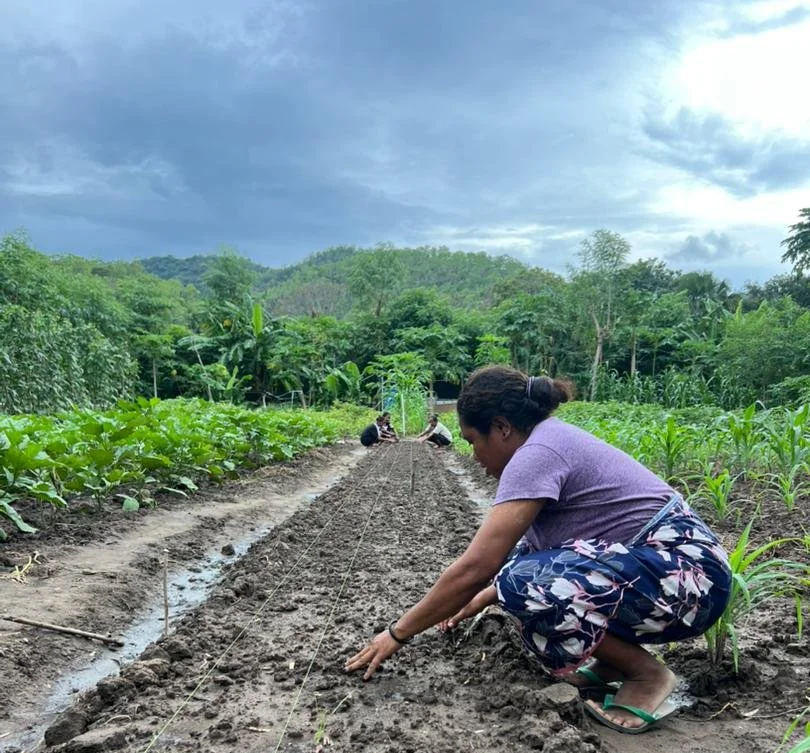
Natalia Fallo from Oecussi in Timor-Leste has turned her life around with support from a Caritas project.
Just a few years ago Natalia, from Oecussi in Timor-Leste had no business, no savings, and little confidence that her situation could change. Her family depended on a small garden that often failed during long dry seasons. Food was limited. Income was unreliable.
“I never imagined I could run a business,” she says. “We were just trying to get through each day.”
Timor-Leste is one of the least developed countries in Southeast Asia. Approximately 16 percent of the population lives on less than $US2.15 per day. And Oecussi is an exclave inside neighbouring Indonesia, with high levels of poverty. Access is difficult. While many families rely on small gardens for food and income, climate change, long dry seasons and limited water make daily life uncertain. Opportunities to earn a living are limited, food insecurity is common and women are often the most affected.
Skills, tools and confidence
But things changed for Natalia when she joined HAFOTI – a Timorese organisation supported by Caritas and the New Zealand Government that helps women entrepreneurs to get on their feet.
Through savings and loans training, Natalia learned how to manage money and plan for the future. Horticulture training and basic equipment helped her grow vegetables using more efficient methods suited to dry conditions. She also learned how to produce and sell local foods, including kiri-kiri, chips, and virgin coconut oil.
A kiosk opens and income follows
Natalia has now opened her first kiosk. She sells everyday household items alongside products she makes herself. The business earns around NZ$ 660 a month, before additional income from vegetables and processed foods. For the first time, her household has a regular income and savings set aside for emergencies.
The changes go beyond money. Natalia’s family eats better from their own garden. They are less exposed to climate shocks. And Natalia has taken on a new role in her community as a business owner and decision-maker.
“I can provide nutritious vegetables for my family,” she says. “Our food security has improved, and household expenses have decreased since we no longer need to buy all basic necessities.”
Natalia’s story reflects what is possible when women are given access to training, tools, and trust. In regions facing increasing climate pressure, women-led livelihoods are strengthening families and local economies.
You can help make this change possible
With your support, Caritas and partners like HAFOTI are helping women across the Pacific and Southeast Asia build sustainable livelihoods, improve food security, and lead change in their communities.
Help more women like Natalia.
Your gift strengthens livelihoods, food security and climate resilience with partners like HAFOTI. Donate at caritas.org.nz/Lent or call 0800 22 10 22.